Say It Both Ways: A Bilingual Ramble Through Chirk's Signposts
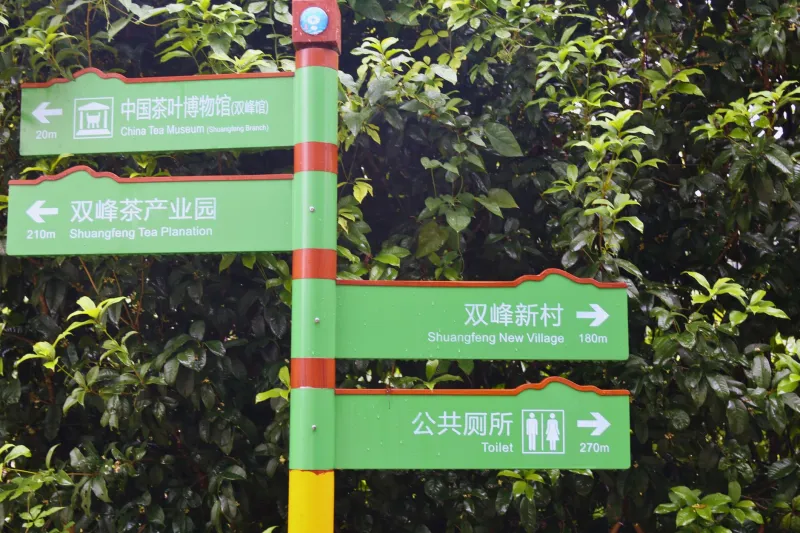
Chirk does not make a fuss about being bilingual. It simply puts both names up and gets on with it. A station sign says Chirk and Y Waun. A canal notice mentions the Llangollen Canal and Camlas Llangollen. A fingerpost points to the castle and Castell y Waun. For a visitor, these are not decorative extras. They are a map key, a pronunciation lesson and a reminder that the border is not just a line on a map but a place where two naming habits have learned to share the same lane.
The village with two introductions
Start with the name you are most likely to say first. Chirk is the English form, and it probably comes from an Old English word for church, cirice. That fits a village that grew around a church and a crossing. Y Waun is the Welsh name, and it means the moor or the low grassy place, from gwaun. Neither name is a translation of the other. They are two different ways of fixing the same settlement in the landscape, one by its church, one by its ground.
Say Chirk as CHURK. Say Y Waun roughly as uh WINE, with the second word rhyming with wine in northern Welsh speech. If you say uh WAHN, most people will still know what you mean, and nobody is going to hand out fines at the station. Castell y Waun, the castle, is approximately KAS-teth uh WINE. The Welsh ll is not an English l, but a soft hiss made by putting the tongue where you would say l and letting air pass. A close English approximation is fine for a visitor; the effort matters more than the accent.
The river that names the valley
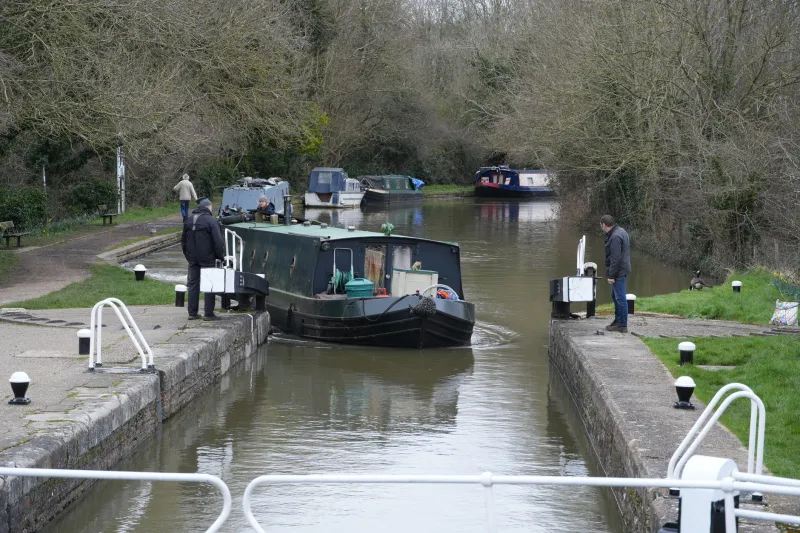
The Afon Ceiriog runs through this story. Afon simply means river, so Afon Ceiriog is the River Ceiriog, not a redundant phrase. The name Ceiriog is older and less certain, but it gives its name to the valley, to Glyn Ceiriog and to Llanarmon Dyffryn Ceiriog further upstream. On the edge of Chirk, the river is both a boundary and a companion to the canal.
Try KAY-ree-og for Ceiriog, with a rolled Welsh r if you can manage it. AV-on is close enough for afon. Glyn Ceiriog is glin KAY-ree-og. You will see these names on everything from community notices to bus stops, and once you have said them aloud a couple of times they stop looking like passwords and start looking like places.
Froncysyllte, Pontcysyllte and the joining word
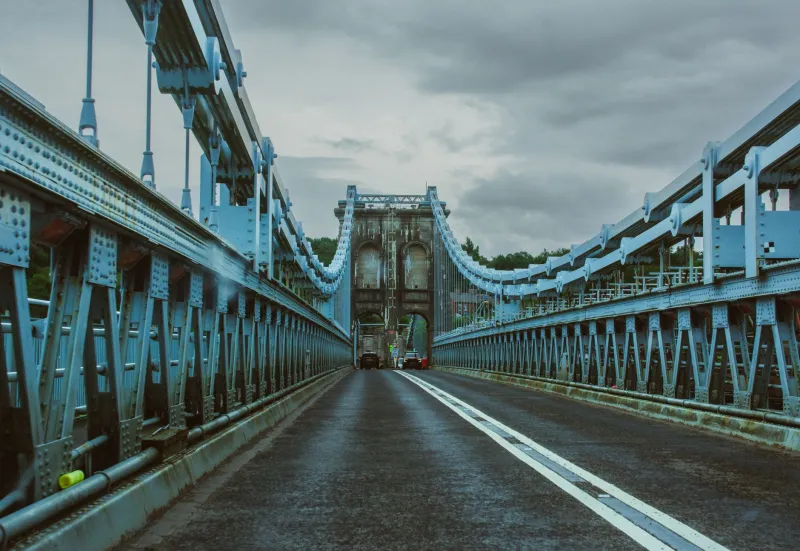
Head east along the canal and the names change shape. Froncysyllte is the village above the Dee, and Pontcysyllte is the famous bridge and aqueduct. Fron means a hill brow or slope. Pont means bridge. The cysyllte element is often linked to cysylltu, to join or connect, which is a neat coincidence for a place whose great aqueduct does exactly that. It is safest to treat that as a helpful clue rather than a hard translation, but it is a good word to notice.
Say Froncysyllte roughly as vron-kuh-SULL-tuh and Pontcysyllte as pont-kuh-SULL-tuh. The v sound at the start of Fron is correct Welsh, not a mistake. Llangollen, the town that gives the canal its English name, is hlan-GOCH-len, with the ll again made softly at the front. Llan originally meant an enclosure or church site, so Llangollen is the church of Collen, a saint's name rather than a description of the scenery.
Eglwyseg and the horizon
Eglwyseg is one of those names that appears on maps and path signs rather than in the middle of the village. It belongs to the moorland and cliffs north of Llangollen, a landscape of edges and long views. The name looks as though it contains eglwys, church, and it may well have a church-related origin, but it is better used as a landscape name than translated word for word. Say it roughly as eg-LOO-uh-seg and enjoy the fact that a place can be named for something as old and faint as a medieval chapel site and still be perfectly useful on a modern walk.
This is what the bilingual landscape reveals. Welsh names tend to describe the ground, the river, the church, the brow of a hill. English names often arrived through estate maps, railways and administrative habit. Put them side by side and you get a fuller picture of the border country than either language gives on its own.
A short trail that uses the signs
This is a loose village-and-canal circuit of about two and a half miles, mostly level, with a short climb if you go up to the castle gates. Allow ninety minutes to two hours if you actually read the signs rather than marching past them.
Begin at Chirk station, where the first bilingual pair is waiting for you. Walk into the village centre and look at the ordinary notices: Canolfan for centre, Aros for stop, Croeso for welcome. These are the words that make a place work, not just the ones that look good on a welcome board.
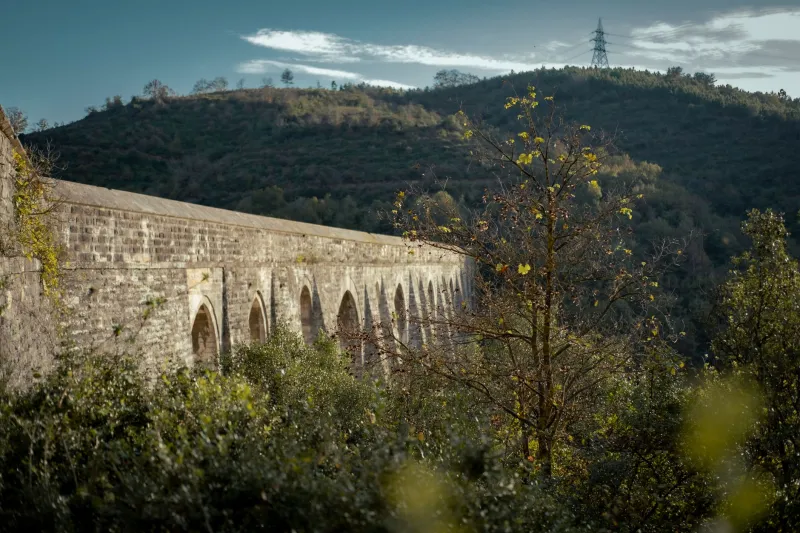
From the village, head for the castle gates and the Castell y Waun sign. Porth means gate, parc means park. You do not need to pay to stand at the gates or to enjoy the approach. Turn back down towards the canal and pick up the towpath. Camlas is canal; traphont is the word you will meet for an aqueduct or viaduct. At Chirk Aqueduct, the signs and the structure do the same job in two different ways: one names it, one carries water across the valley.
Finish by the Ceiriog, where the river name and the border story sit close together. If you have time, carry on to Pontcysyllte or take the bus towards Froncysyllte. The short route is enough to make the point. The longer one proves it.
A few words to carry home
Afon is river. Pont is bridge. Castell is castle. Camlas is canal. Traphont is aqueduct or viaduct. Llan is church site. Parc is park. Porth is gate. Croeso is welcome. Aros is stop. None of these will make you fluent, but they will make the signs around Chirk feel less like a test and more like a conversation. And on a border like this, that is the right way to travel.