When the Locks Go Quiet: Winter Maintenance on Chirk’s Stretch of the Llangollen
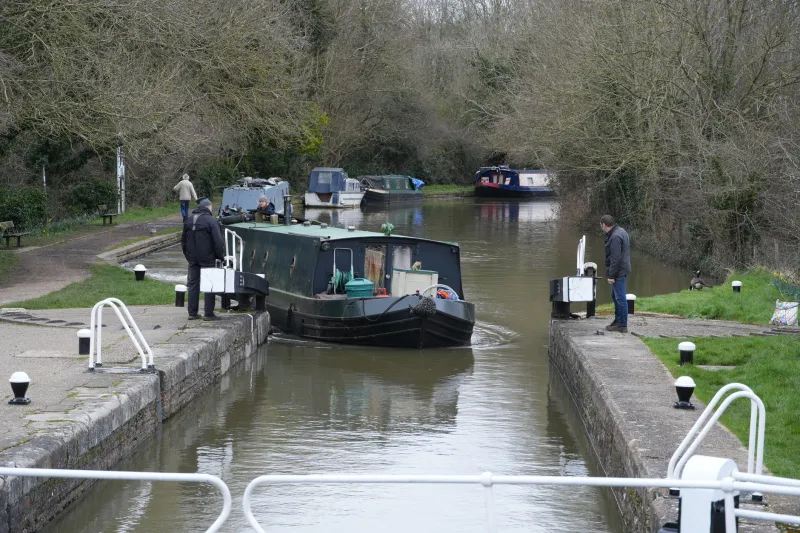
November on the Llangollen Canal is a different place. The day boats have mostly gone back to their bases, the aqueduct is quieter, and the towpath has that damp, leaf-mulched smell that means winter is close. But the canal hasn’t stopped working. It is simply changing shift.
Around Chirk, the colder months are when a lot of the unglamorous, essential work gets done: greasing the lock gear, checking gate timbers, repairing towpath edges before the first hard frost gets into them. It is work that most visitors never see, and it is the reason the canal still functions as a living navigation rather than a museum piece.
The Season Turns
You can often spot the change before you read about it. The lock beams look a little more closely examined. There are fresh grease marks on the paddle gear. A pile of stone sits beside a towpath edge that was fine in September. A temporary fence appears where a gate has been taken off for repair.
This is the canal’s off-season rhythm. Winter is when the Canal & River Trust and its contractors try to get ahead of wear and tear, often in short windows when boat traffic is low. Some jobs are planned months in advance; others are the result of an inspection that found something wobbling, leaking or starting to split.
Grease, Gears and the Anatomy of a Lock
A lock looks simple from the towpath: heavy gates, a balance beam, paddles that let water in and out. In practice it is a small machine, and machines need feeding.
Much of the winter work is about the gear that raises and lowers the paddles. Racks and pinions get cleaned and greased. Worn cogs are swapped out. Paddle rods are checked for bend or slack. Gate hinges are looked at, because a gate that drops on its hinges will soon start dragging or leaking. The aim is not to make everything shiny; it is to make it move smoothly when the season starts again.
Visitors may notice grease guns, hand tools and the occasional paper template taped to a beam. None of it is dramatic. All of it matters.
Oakum, Elm and the Honest Repair
Lock gates are not delicate. They are big, wet, heavy pieces of wood that spend their lives holding back water and taking knocks from boats. Historically, gate construction and repair relied on oak and elm, with oakum — tarred fibre — used for caulking seams and keeping things watertight. That is the old language of the canal, and you can still see echoes of it in how gates are built and maintained today.
Modern repairs often use different materials and methods, but the principle is the same: find the weakness, dry it out if you can, replace what is rotten, and make the gate true again. Some of this happens in a workshop. Some happens on site, with the gate lifted clear and the water held back. Either way, it is slow, skilled work, and it is easier to do when the canal is quiet.
Towpath Edges and the Frost Problem
Locks get the attention, but the towpath takes a beating too. Edges crumble. Drainage fails. A puddle that seems merely annoying in July can become a frozen trip hazard in January. Winter maintenance often involves rebuilding towpath edges, clearing gullies and resurfacing short stretches before frost gets into the ground and makes everything move.
If you walk the Chirk stretch this winter, you may see temporary fencing, stacks of stone or a digger parked up beside the cut. It is worth giving these spots a wide berth rather than climbing over barriers. The work is there to keep the path usable for everyone, and the people doing it are usually working in cold, wet conditions.
How Closures Are Announced
Temporary closures are not meant to be a mystery. The Canal & River Trust publishes stoppage notices, and local signs usually go up at locks, bridges and access points. Boatyards and hire companies pass the word along. If you are planning a walk or a boating day around Chirk, it is worth checking the trust’s stoppage pages before you set out, especially in the winter works season.
Some closures are planned well ahead; others are emergency repairs after a gate fails or a bank slips. Either way, the notice should tell you what is closed, for how long, and whether there is a diversion. Towpath diversions are not always obvious on the ground, so allow extra time and be prepared to turn back.
The People Behind the Waders
A lot of this work is done by canal staff and contractors with specialist skills, but volunteers play a part too. Local groups help with painting, vegetation clearance, litter picks and small repairs. Volunteer lock keepers and lengthsmen-style roles help keep an eye on things through the year. It is a mix of paid expertise and local care, and it is one reason the canal feels looked after rather than merely maintained.
A Working Heritage, Not a Museum
The Llangollen Canal is often described as a heritage route, and it is. But heritage here is not a rope barrier and a label. It is a working waterway that still needs grease, timber, stone and people who know how to use them. The winter closures and the quiet repairs are part of that story.
So if you see a locked gate or a fenced-off towpath around Chirk this winter, it is not a sign that the canal has shut down. It is a sign that someone is getting it ready for the next season — and that the locks will still be turning when the boats come back.