Ciphers in the Street: A Postbox Circuit Through Chirk
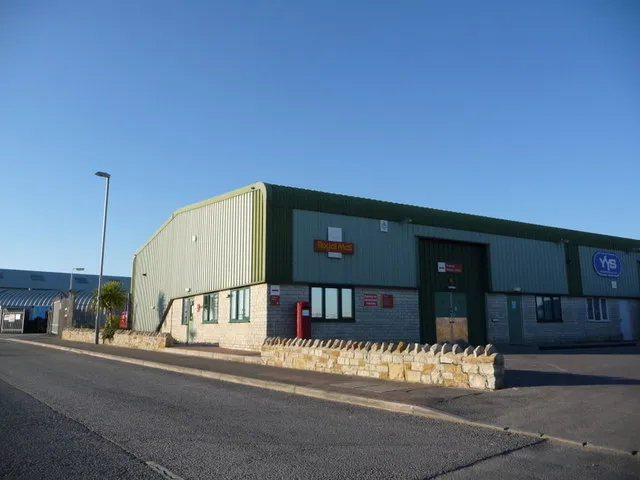
Photo: Chris Downer, CC BY-SA 2.0, via Wikimedia Commons
The red postbox is such a familiar piece of street furniture that most of us stop seeing it. In Chirk, though, the boxes are worth a second look. They sit at junctions, in boundary walls and on the edge of pavements, and each one carries a tiny set of clues: a royal cipher, a replacement door, a thick coat of paint over older layers. Follow a handful of them and you get a modest but useful walk through the village's growth, from the railway and the castle estate to the shops and the canal.
This is not a treasure hunt, and it is not a complete survey. Postboxes are working equipment, and positions can change. Treat the route as a loose circuit of about a mile and a half, mostly on pavements, with plenty of places to pause. The point is to notice what is already there.
Start by the Station
Begin at Chirk railway station. Before turning towards the village, have a look along Station Road for a box set into a boundary wall or standing near the station approach. Wall boxes are particularly good for this kind of walk because they cling to older stonework. Look at the hinges on the door. If one is newer than the other, or if the paint has filled the screw heads, the box has been repaired rather than replaced. That is part of its history.
From here, walk towards the village. Station Road has a gentle incline in places, and the pavement is not always generous, so take your time. The railway came to this part of the border country in the nineteenth century, and the streets around the station grew up to serve people who arrived and left by train. A postbox here was not decorative. It was placed where the postman already had a round.
The Cipher Is the Date You Cannot Quite Read
Most boxes carry a royal cipher under a crown. VR means Victoria Regina, so the box has Victorian origins. GR can mean George Rex, but you need the numeral to know which George. ER can mean Edward Rex or Elizabeth Regina, again depending on the numeral. Newer boxes may carry a cipher for the current reign, or no cipher at all. The cipher is not a precise date stamp, but it is a useful hint.
The cipher is only half the story. Repair scars matter just as much. A box may have a replacement door, a new lock, a filled hole where a plate once sat, or a shadow where a notice has been removed. Layers of red paint soften the edges of the casting. Some boxes have been repainted so often that the lettering looks like it is sinking into the metal. These are not faults. They are the signs of a piece of equipment that has been in daily use for decades.
Into the Village
Carry on towards the A5 and use the crossing rather than trying to nip across. Once you are in the older part of the village, head for Church Street. Look for a wall box set into a garden or churchyard wall, or a pillar box near a junction. Chirk's parish church is a good landmark here, and the streets around it show how the village grew around the church, the castle estate and the turnpike road.
A postbox in a wall can tell you where a shop, school or post office once stood. It can also show where people walked before newer roads took the traffic away. In a village like Chirk, the boxes are not spaced evenly like bus stops. They cluster where there were errands to run: by the church, near the shops, on the way to the station. That pattern is a small map of daily life.
Castle Street and the Estate Edge
Continue towards Castle Street. The climb is moderate, and the pavement is narrow in places, but the reward is a sense of how the village sits between the castle grounds and the ordinary streets. Look for a box near the castle approach. It may be a pillar box rather than a wall box, and its base will tell you whether it has been reset or moved. The castle gates themselves are worth a pause, but that is another walk.
What you are looking for here is placement. A box near the castle is not just for visitors. It served estate workers, villagers and the postman's route. The red against the grey stone is a reminder that the castle was never separate from the village. It was part of the same working landscape.
Lamp Boxes and the Edge of the Village
On the way back, look for a smaller lamp box, perhaps mounted on a post near the canal side or on a stretch of pavement where a pillar box would have been awkward. Lamp boxes were designed for places where space was tight, and they are often found at the edges of villages or on rural roads. In Chirk, one near the canal or the newer housing gives you a neat contrast with the older wall boxes.
This is also where odd placements become interesting. A box may stand at what looks like a random point until you notice the old boundary, the former shop, or the footpath that once led elsewhere. Roads widen, kerbs are rebuilt, and boxes are moved a few feet. The result is a piece of street furniture that looks permanent but has a quiet history of adjustment.
Practical Notes for the Walk
Allow about an hour, or a little longer if you stop for photographs. The circuit is roughly a mile and a half if you start and finish at the station. Most of it is on pavements, but Church Street and Castle Street have narrow sections and moderate slopes. The A5 crossing is the main road point, so use the lights. Wheelchair users and people with buggies should find the route manageable with care, though a companion is useful on the narrower pavements. Benches near the church and in the village centre give you places to rest.
Do not treat the boxes as exhibits. They are still emptied, still used and still part of the working village. Stand to one side when you look at them, and do not block the pavement. If you photograph a collection plate, avoid including anyone's house in a way that feels intrusive. The best light is usually mid-morning, when the red paint picks up a little warmth against the stone.
By the end, the boxes may still look like ordinary street furniture. That is the point. Chirk's history is not only in the castle and the aqueduct. It is also in the small red things on the pavement, quietly showing where the village has been, and where people still go.