Scrollwork, Bills and Bersham Iron: Reading Chirk Castle’s Great Gates
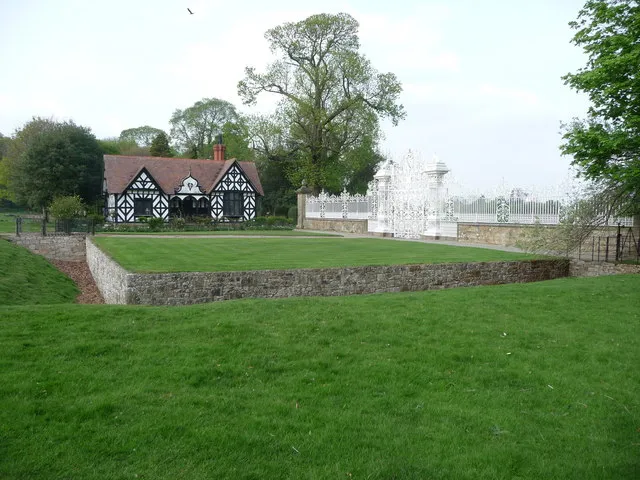
Photo: Jeremy Bolwell , CC BY-SA 2.0, via Wikimedia Commons
Most visitors meet the iron gates at Chirk Castle on the way to somewhere else. There is a courtyard to cross, a tea room to locate, a walled garden or a deer park to fit in before the light goes. The gates get a glance and a photograph. That is a shame, because they are one of the best close-up lessons in borderland craftsmanship you will find on a day out.
The gates are wrought iron, made in the early 18th century by Robert and John Davies of Bersham. They are not simply a barrier with a nice pattern. They are a calling card in metal: a statement about taste, money and the reach of a great estate. Look closely and you can read the hand of the smith, the economics of the commission and the slightly awkward question of who paid for it all.
First, stop treating them as a doorway
A good gate is designed to be looked through, not just walked through. So begin by standing back far enough to see the whole rhythm of the thing. Notice how the vertical bars are not a flat fence but a composition. The scrolls curl and counter-curl. Leafwork fills the spaces between the main lines. There is a deliberate balance between open space and dense ornament, so that the gate reads clearly from a distance and still rewards you when you get close.
Then step nearer. Wrought iron is made from small pieces of iron worked at the forge and joined together. It is not cast in a mould like a modern railing. That matters, because it means the gates are full of small decisions. A scroll may have been formed hot and then fire-welded to its neighbour. A leaf tip may have been hammered thinner. A joint may be hidden behind a collar or a wrap of metal. The surface is painted now, of course, and thick paint can soften detail, but the structure is still there.
Look for the joins. Look for slight swellings where pieces meet. Look for places where one bar laps over another. Look at the back of the gates if you can, where the paint is often thinner and the working marks are less dressed. Handwork is not machine-perfect. That is the point. A tiny variation in a scroll or a leaf is not a fault; it is evidence of a person at a forge.
The brothers behind the bars
The Davies brothers were not village blacksmiths turning out horseshoes and hinges. They were based at Bersham, near Wrexham, a place with a serious industrial reputation in the 18th century. Bersham had ironworks, furnaces and forges, and it sat in a borderland landscape of coal, water power and transport. Robert and John Davies worked in that world. Their gates at Chirk Castle sit somewhere between craft and early industry: highly skilled, hand-forged work, but produced by a workshop with a name and a reputation to protect.
The Myddelton family, who owned Chirk Castle for centuries, paid for the commission. That is the short answer to who paid. The longer answer is that the estate paid in the way estates usually did: by agreeing a figure, expecting quality, and then discovering that ambitious ironwork is not a cheap business. Wrought iron takes time. It takes fuel, bar iron, transport and a great deal of skilled labour. The bill was never going to be just the cost of the metal.
A bill that would not stay tidy
The commission has the familiar smell of a project that grew. There was a design to realise, iron to be sourced, work to be carried out at a distance from Bersham, and a patron who wanted something impressive. Estate accounts and later retellings of the commission suggest that the final cost was not a neat, comfortable figure. There is a whiff of sharp practice, or at least of hard bargaining, depending on whose side you take. The brothers had a business to run. The estate had a reputation to maintain. Somewhere in the middle was a set of gates that had to be paid for.
That is the scandal, such as it is: not a lurid crime, but the very British drama of a quote, a variation and a final invoice. Great houses are full of this sort of paperwork. We tend to admire the finished object and forget the arguments behind it. At Chirk, the argument is part of the object. The gates are beautiful, but they are also a reminder that beauty has a budget.
How to read the ironwork on a visit
You do not need to be a metalworker to get more out of the gates. A few simple habits will do.
- Start at a distance and find the main rhythm. Is the design symmetrical, or does one side answer the other? Follow a single scroll from its centre to its tip and see where your eye wants to go next.
- Look for the joints. Wrought iron is assembled, not poured. Fire-welded joins, collars and overlapping bars are part of the look, even when the smith has tried to disguise them.
- Study the leaf tips. Hand-forged leaves tend to vary. Some are fuller, some are sharper, some have a slightly different curve. That variation is a signature.
- Compare front and back. The front is the show face. The back is where you see how the thing was put together.
- Look for repairs. Old ironwork has had a long life. Newer welds, blunt tips, patches and replacement sections are part of its history, not a reason to lose interest.
- Use the light. On a low winter afternoon, the sun rakes across the surface and turns every scroll into a shadow. November is a particularly good month for this, provided you catch the castle when it is open.
The borderland in the bars
Chirk Castle sits close to the Wales-England border, and the gates are a borderland object in more ways than one. The iron came out of an industrial district at Bersham. The money came from a landed estate at Chirk. The design belongs to the polite world of early 18th-century taste, while the making belongs to the rougher world of forges, coal and cart tracks. The gates hold those worlds together.
That is why they are worth more than a photograph. They show that the border was not just a line on a map. It was a supply chain. It was a set of working relationships between estates, workshops and towns. It was also a place where a family could make a name for itself in iron and then hope the name would outlast the bill.
If you go
Chirk Castle is in the care of the National Trust, and normal admission applies. Opening times vary through the year, so check ahead before setting out, especially in winter. The gates are part of the visit rather than a separate attraction, which is exactly right: they were made to be used. Give them five quiet minutes before you move on.
If you want to stretch the day, pair the castle with the canal and the Ceiriog valley. The iron gates belong to the estate, but the industrial story they tell spills out into the wider border landscape. Once you have learned to read the scrollwork, you will start noticing ironwork everywhere: church screens, estate railings, canal bridges and the small, sturdy details that most people walk straight past.
That is the real reward. The gates at Chirk Castle are not just old metal. They are a document in iron, written by two brothers from Bersham and paid for, eventually, by a family who wanted the world to know they had arrived.