Signs of the Times: Reading Chirk's Pub Fronts from the Pavement
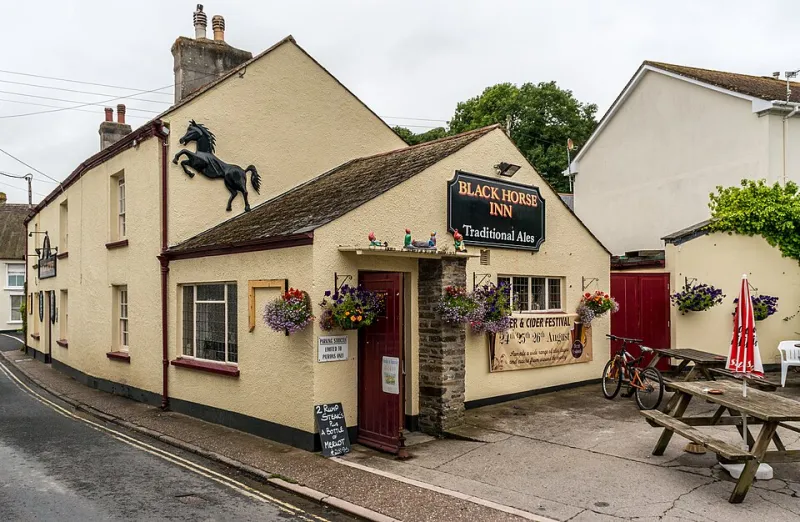
Photo: Dietmar Rabich, CC BY-SA 4.0, via Wikimedia Commons
A pub sign is the cheapest history book in the village. It costs nothing to read, it hangs at eye level, and unlike most archives it swings about in the wind and occasionally falls on a car. Chirk has a decent little collection of them, and if you walk the village with your eyes at first-floor height rather than at phone height, you start to notice that each one is making an argument — about who owned the land, which trade paid for the building, and what the landlord thought you wanted to drink in 1905.
This is not a pub crawl in the usual sense. It is a walk with a pint at the end of each leg, which is a different and altogether more respectable thing.
Start with the bracket, not the picture
Before you look at the painted board, look at the ironwork holding it up. Wrought-iron brackets in this part of the border country tend to be older than the signs they carry, and the shape of the scrollwork often survives a change of name, a change of brewery and several changes of mind. Where a bracket has clearly been re-drilled, you are usually looking at a house that has been renamed at least twice.
The sign itself is a strange sort of document. It was never meant to last. Most are repainted every decade or so, and each repaint quietly edits the past: a crest loses a quarter, a date disappears, a colour gets brighter. Treat what you see as the latest draft of a story rather than the first.
Crests, coronets and the castle interest
Chirk is a castle village, and the castle interest shows up on the signs. Look for the marks of the great estate: shields, supporters, motto scrolls, and the assumption — rarely stated, always understood — that a licensed house near the gates did well to look loyal.
The Hand Hotel is the obvious place to begin, not least because the name itself is a small puzzle. Hands turn up in border heraldry with pleasing regularity, and the estate connection is the explanation most often offered over the bar, though I have yet to meet anyone willing to stake a full round on it. Stand back and look at the whole frontage rather than the board: the proportions, the coach entrance, the way the building sits astride the road, all say this was a house built for people arriving with horses and business.
Heraldry on a pub sign is not decoration. It is a receipt. It says a landlord once needed somebody powerful to notice him.
The canal and the railway write their own names
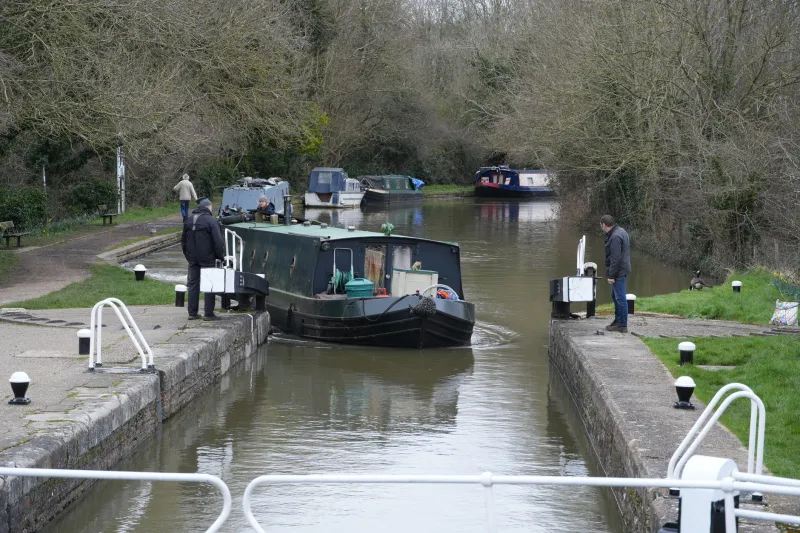
Then there are the trades. Where the water is close, the signs and the names tend to follow it: bridges, barges, towpaths, a general air of having once been busy at four in the morning. The Bridge Inn makes no secret of its geography, and a sign that names a piece of infrastructure is a sign that knows exactly which customers it was built for.
Railway loyalty is subtler but just as readable. An engine on a sign, a name that gestures at the line, a repaint in a colour a Victorian company liked — these are the fingerprints of a trade that arrived in the 1840s and rearranged the village's economy without asking.
And then there is the third category: names invented long after the fact. A modern name like the Poacher's Pocket is not a survival, it is a costume. That is not a criticism. Pubs have always renamed themselves to suit the mood of the moment; it is just worth knowing which signs are documents and which are marketing.
When temperance came for the frontage
The most interesting edits are the quiet ones. In the decades around the turn of the twentieth century, temperance pressure, licensing magistrates and simple commercial caution persuaded plenty of Welsh and border pubs to soften their image. Boards were repainted. Words like 'tavern' and 'inn' gave way to 'hotel', which sounded respectable and could mean almost anything. Some houses acquired a coffee room. A few tried a whole new identity and quietly dropped it a few years later.
You can often spot the survivors of that era by the way the word 'hotel' sits on a building that is plainly, structurally, a village pub. The sign got ahead of the architecture.
The brewer's hand
Later came the takeovers. When the big breweries absorbed the small ones, they did what any buyer does: they standardised. Unified typefaces arrived. Livery colours spread from board to fascia to hanging basket. House styles replaced one-off painted panels, and a generation of local sign painters lost a line of work.
This is why so many signs in any British village look related to each other. They are related. Look for the odd one out — a sign still carrying an older letterform, or a bracket that no longer matches its board — and you have found the house that got missed.
The ones that got away
Part of the pleasure of this walk is the gaps. Chirk, like every village its size, has lost pubs: closed by licensing decisions, converted to housing, demolished for road schemes, or simply quietly absorbed into somebody's front room. The clues are still there if you know what to look for.
Watch for buildings that have a wide front door set at an angle to the street, a blanked-off window where a serving hatch once was, or a stone sill worn into a curve by generations of leaning. Watch for names carved above doors on houses that have no business having names carved above doors. Watch, too, for the tell-tale absence: a row of terraces where every third house has a slightly grander frontage than its neighbours.
Ask in any of the surviving pubs and you will get a different list of vanished houses, delivered with total confidence. The lists rarely agree. That is part of the fun.
A winter circuit with an alibi
For a short afternoon in the colder months, keep it simple: two and a half miles, one loop, three stops maximum, and a firm resolution to be back before the light goes.
Start at the top of the village and work downhill towards the water, which gives you the excuse of a slope to walk off. Read the frontages on the way. Pause where a bracket looks older than its board. Cross towards the bridge, take the canal for a stretch, and come back up through the middle of things rather than retracing your steps. Winter is the right season for this: fewer people, more visible architecture, and a genuine physical reason to go inside.
Do not attempt to do all of it in one go. The point is not to finish the list.
Practical notes
Opening hours in a border village change with the season, and a house that is busy on a Friday can be shut on a Tuesday afternoon in January, so ring ahead rather than building a route you cannot deviate from. Evening walks need a torch on the unlit stretches. And if you find a sign older than you expected, photograph it — the next repaint may not be kind to it.