Brick, Lime and Rope Scars: How to Read the Working History of Chirk's Canalbank
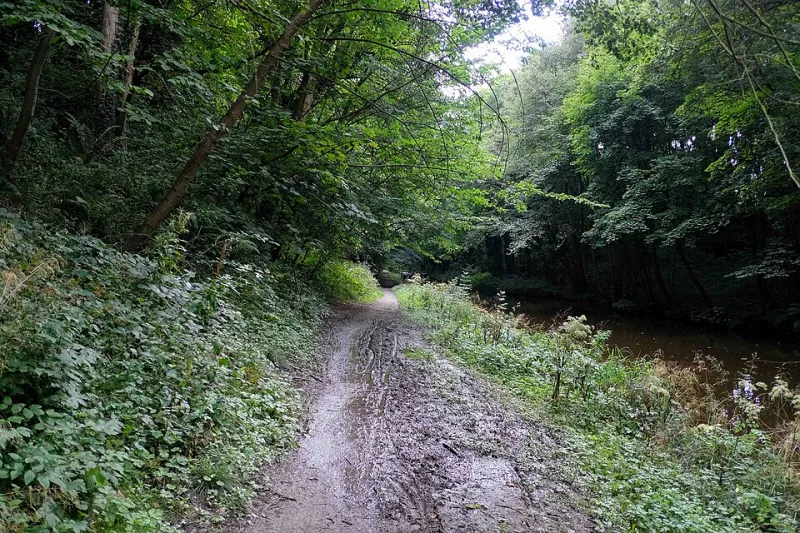
Photo: Jeff Buck , CC BY-SA 2.0, via Wikimedia Commons
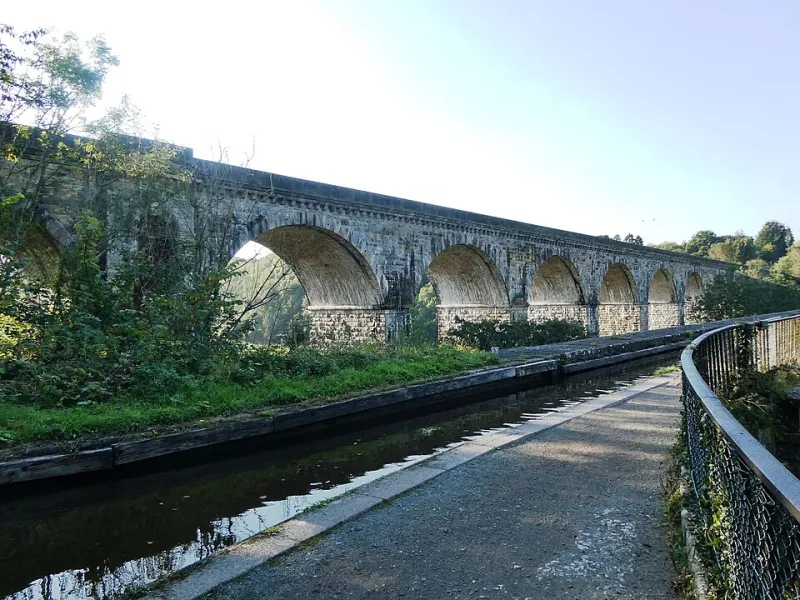
Ask anyone to name a structure on the Llangollen Canal at Chirk and they will say the aqueduct. Fair enough: ten arches, Thomas Telford, opened at the start of the nineteenth century, still carrying narrowboats a couple of hundred years later. It earns the fuss.
But the aqueduct is the showpiece, and showpieces are the least useful things to look at if you want to understand how this valley actually worked. The evidence is in the plain stuff either side of it — wharf walls, lime kilns, tramway shelves, the polished coping stones where ropes ran. Almost none of it is labelled. Much of it is a foot under the grass or half a step beyond the towpath edge. This is a guide to spotting it, and to not going in the water while you try.
Start at the wharf, not the aqueduct
Walk west from the aqueduct towards Chirk Bank and you pass through the stretch that did the work. Notice, first, that the canal is wider here than it needs to be for two boats to pass. That width is deliberate. It is a winding and turning place, a lay-by, a place where a boat could be brought alongside a wall and loaded rather than admired.
Look at the towpath side and the offside both. Loading happened on whichever bank had the cargo, and at Chirk that meant both. Where the offside wall is stone rather than brick, and where it changes course in a neat right angle for no obvious reason, you are usually looking at the edge of a former wharf or a building that has since gone.
Bays, slots and iron scars
Once you know what you are looking for, the walls start talking.
- Recesses in the brickwork. Small squared-off bays, often a few feet wide, where a boat could be nudged in close. Some now hold nothing but nettles.
- Iron staples and rings. Rare, but they survive. Anything rust-stained and half-buried in a coping stone deserves a second look.
- Wear marks. Coping stones get polished into shallow scoops where ropes ran across them for decades. It is the most human trace on the canal — friction, in stone.
- Patched sections. Brick infill in a stone wall, or stone in brick, usually marks a doorway, a chute or a collapsed length that has been made good.
- Culvert mouths and overflow weirs. Side weirs that let surplus water out of the canal are part of the working kit, not decoration. Some are handsome; some look like a hole in a hedge.
The kilns and the fields they fed
Lime is the quiet giant of border country agriculture. Burnt limestone went onto acid fields to sweeten them, and into mortar for every decent building for miles. The canal was how it moved, and small kilns were built into the bankside where the coal and the stone could meet the water.
You will spot them as grassy mounds with a stone or brick mouth facing the canal, sometimes with a scorched, reddened look to the brickwork inside. Several have been consolidated and left open to the air; others are little more than a shape in a hedge. Do not climb into anything. Drystone and old mortar are not maintained to modern standards, and a kiln interior is exactly the sort of place a loose coping stone chooses to sit.
Ghosts of the Glyn Valley Tramway
Chirk was the lowland terminus of the Glyn Valley Tramway, the narrow-gauge line that brought slate and granite down from the Ceiriog Valley quarries to meet the canal and the main line. It closed in the 1930s, but its approach is still legible if you walk with your eyes on the ground.
Look for a straight, hedge-lined shelf running in towards the canal corridor — flatter than a footpath, straighter than a field boundary. Gateposts that lead nowhere useful are a good sign. So is a line of trees that is too orderly for its surroundings. Local historians have traced the route in some detail; you do not need the map to notice that something used to run here.
Why Chirk, and why water
It is worth remembering what the canal was actually for, because it explains the oddities. Coal, lime, slate, timber, grain and general goods all moved along this stretch, and the branch also carried something less romantic: water. The Llangollen branch became a supplier to the wider canal system, feeding reservoirs and pounds far to the east.
That is why you find engineering that seems oversized for a rural valley. It was oversized. The valley was never the point on its own.
Reading the towpath without incident
The towpath is a working surface, not a promenade, and it shows. Practical notes:
- Wear boots with grip. Wet stone coping and clay are the two surfaces that put people over the edge.
- Treat the edge as soft. Vegetated margins often hide a filled bay, a drop, or a very old wall. Grass is not ground.
- Give anglers and boat crews room. Ropes and poles cross the path without warning.
- Carry a torch for the tunnel. The towpath runs through Chirk Tunnel with a handrail, but the light levels are not generous.
- Take the aqueduct slowly in wind. The deck is narrow, the handrail is on one side only, and the gusts arrive without a run-up.
The fragments most people walk past
If you have an hour, spend it on these: the scoop of worn coping near the old wharf, the kiln shapes in the bank, one culvert mouth, one iron staple, and the line of the tramway approach. None of them is dramatic. All of them are evidence.
And that is the pleasure of it. The aqueduct tells you what engineers could do. The walls and kilns tell you what people did on a Tuesday.