Five Border Marks Around Chirk That Explain Wales and England Better Than Any Map
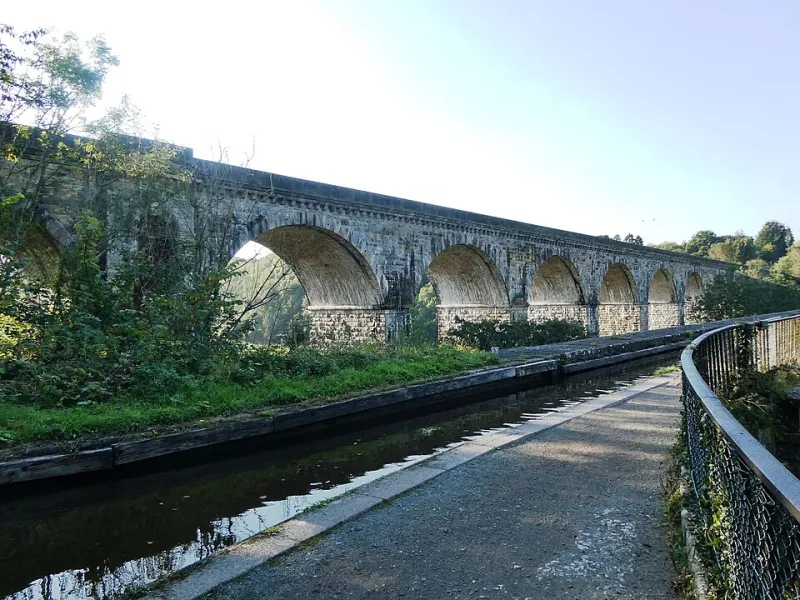
Photo: pam fray , CC BY-SA 2.0, via Wikimedia Commons
The Wales–England border is often drawn as a single line on a map, but around Chirk it behaves more like a stack of layers. There is the medieval castle, the early medieval dyke, the industrial canal, the Victorian railway and the ordinary roads that people still use to get to work. Each one tells a different story about what a border is for — and who gets to decide where it runs.
That is why Chirk is such a rewarding place to think about the line between two countries. It is not a museum of border history; it is a working village where the border is part of the everyday landscape. These five landmarks are a good place to start, whether you are visiting for the day or simply trying to see your own patch with fresh eyes in 2026.
1. Chirk Castle: the border as power
Chirk Castle is the obvious starting point, but it is worth resisting the postcard version. This is not just a handsome National Trust property with gardens and a car park. It is a statement in stone: a Marcher castle built to hold ground in a contested borderland. The castle was part of a wider system of fortification and authority, and its position says as much about control as it does about defence.
What it reveals about the border is simple and slightly uncomfortable: borders are often made by power, not by geography. The castle's owners were not drawing a neat line between two modern nations; they were managing land, loyalty and local influence in a world where the border was something you enforced, negotiated and occasionally fought over.
Visiting responsibly: check opening times before you travel, especially outside the main season. Use the car park and marked paths, keep dogs under control where requested, and do not treat the estate as a free-for-all. The castle is a major visitor attraction, so arriving early or late in the day usually makes for a calmer experience.
2. Offa's Dyke: the border as earthwork
Offa's Dyke is the landmark that most people reach for when they want to explain the Wales–England border. It is an earthwork, not a fence, and it does not run in a perfectly tidy modern line. That is precisely why it is interesting. It shows that the border has never been a single fixed thing; it has been a series of claims, agreements, defences and local realities.
Near Chirk, the dyke is part of a wider borderland landscape rather than a single dramatic set piece. The Offa's Dyke Path passes through this country, and walking a short section is a good way to feel the scale of the thing. It is not just a history lesson; it is a long-distance route that still shapes how people move through the borderlands.
Visiting responsibly: do not climb or scramble over the earthwork. It is archaeology, not a jungle gym. Stick to public rights of way, close gates behind you, and keep to the path where erosion is a problem. If you are walking with a dog, check local livestock notices before you set off.
3. Chirk Tunnel: the border as engineering
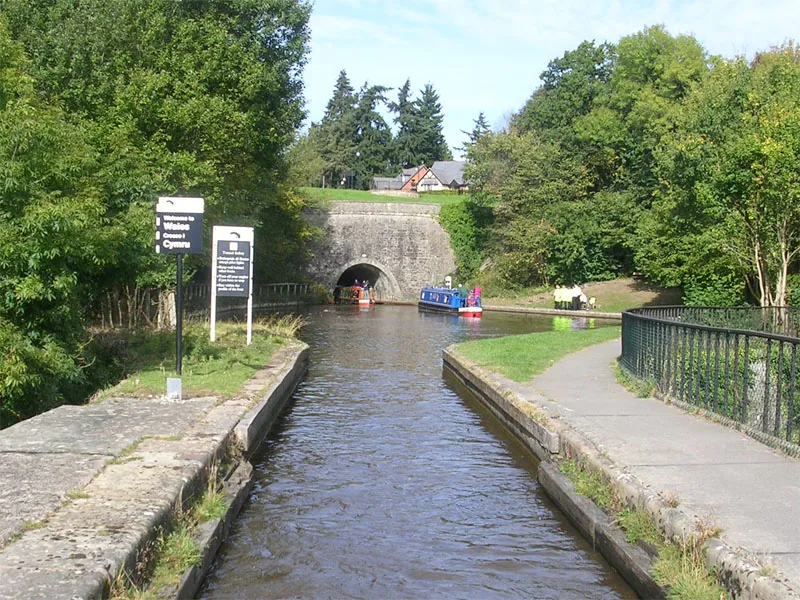
The canal tunnel at Chirk is a reminder that the border has also been a problem to be solved. The Llangollen Canal had to get through this landscape, and the tunnel was part of the answer. It is dark, narrow and atmospheric — and it says something about the industrial confidence of the people who built it.
What does a tunnel reveal about the border? It shows that trade and transport do not care much for political lines. Goods, coal, lime and people needed to move, and the canal engineers found a way through the ground. The borderland was not just a place of defence; it was a corridor.
Visiting responsibly: if you walk the towpath through the tunnel, take a torch and wear sensible footwear. The surface can be wet and uneven. Keep to the towpath side, watch for boats, and do not stop in the middle of a narrow section for a photoshoot. In winter, check canal conditions and any local closures before setting out.
4. The viaduct and aqueduct: the border as connection
The Chirk Viaduct and the Chirk Aqueduct are often spoken about together because they sit so close to one another, and together they make a brilliant lesson in layers. The aqueduct carries the canal over the Ceiriog valley; the viaduct carries the railway. One is a product of the canal age, the other of the railway age, and both are feats of engineering that changed how this borderland connected to the rest of Britain.
This is the border as connection rather than division. The valley below is a natural boundary of sorts, but the aqueduct and viaduct turn it into something to be crossed. They also remind us that the Industrial Revolution did not respect county boundaries or national stereotypes. The borderland was a place of movement, engineering and trade.
Visiting responsibly: use official viewpoints and public paths. Do not trespass on the railway, and do not lean over edges for a better shot. If you are walking the canal, keep an eye on boat traffic and muddy towpaths. The best views are often from the public footpaths and bridge points rather than from anywhere dramatic and dangerous.
5. The old border roads: the border as everyday life
The old roads around Chirk are the least glamorous of the five landmarks, and that is exactly why they matter. The A5, the lanes towards the village and the minor roads that thread through the borderland are not just transport links; they are the places where the border is lived. People cross for work, shopping, school, family and a night out. The line on the map matters less than the route you know by heart.
This is the border as ordinary life. It is not a dramatic earthwork or a castle wall; it is a road sign, a bridge, a junction and a hundred small decisions about which way to go. If you want to understand why Chirk feels neither simply Welsh nor simply English, the roads explain it better than any grand monument.
Visiting responsibly: if you are driving, expect narrow sections, farm traffic and cyclists. Park only where it is legal and do not block field gates or pavements. If you are walking, use verges carefully and wear something visible on lanes without pavements.
Why Chirk remains a layered border place
Put these five together and you get something more interesting than a simple border line. Chirk Castle shows power; Offa's Dyke shows an older claim on the land; the tunnel shows engineering and trade; the viaduct and aqueduct show connection; and the roads show everyday life carrying on across the line.
That is the real reason Chirk is such a good place to think about Wales and England. The border here is not one thing. It is a castle, an earthwork, a tunnel, a bridge and a turning off the main road. It is history you can walk through — and a landscape that still asks you to look twice.